
Arrest Warrants in Jackson County
In Tennessee, an arrest warrant is a written order telling an officer to bring a person before a judge. The process starts with a complaint or affidavit. A judicial official then weighs probable cause. Jackson County's own General Sessions page states plainly that the judge may issue arrest warrants, so the local warrant authority is no mystery. What the county does not publish is a public warrant index. The paper itself tells you a lot, though. A warrant can carry a supporting affidavit, the offense and Tennessee Code section, the arrest command, bond terms, a signature, and the officer's return. The full facts live in the court file and the law-enforcement record, not in a web search. A warrant search online will not carry them.
Jackson County General Sessions Names the Authority
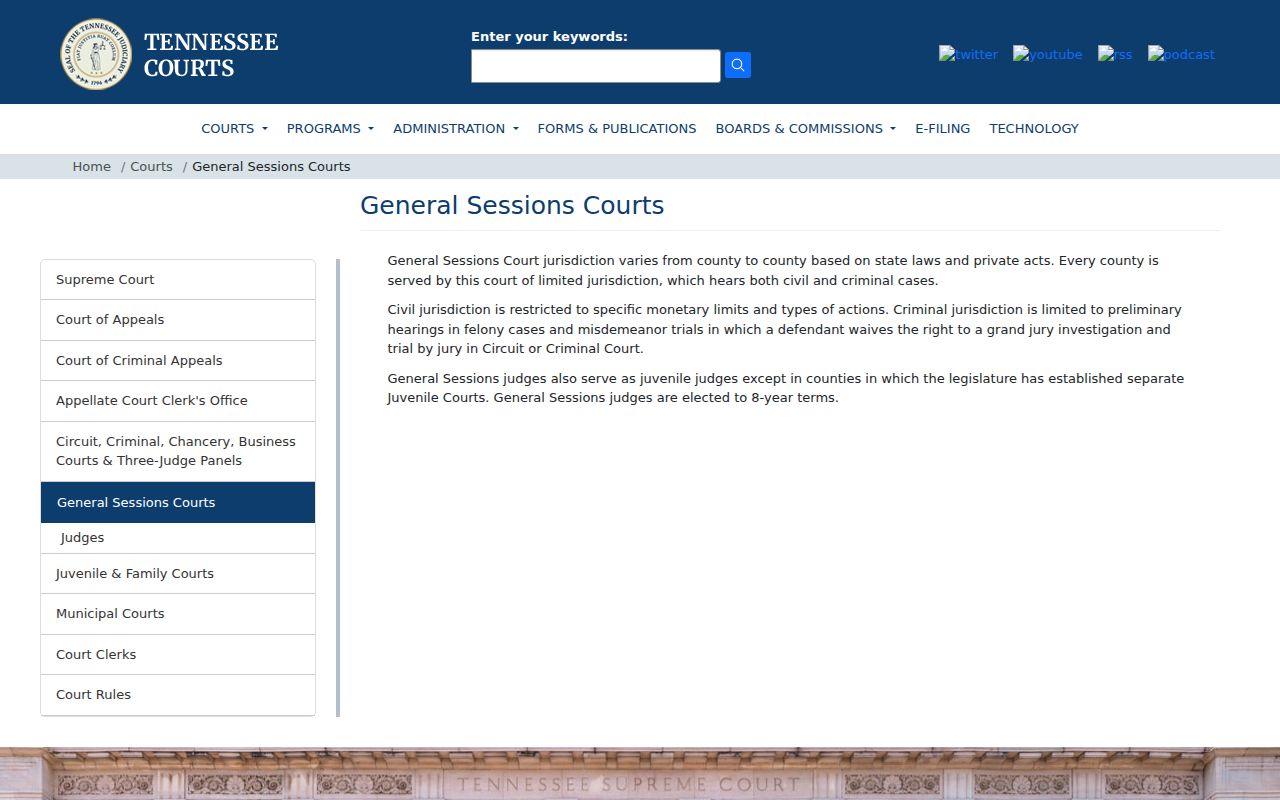
Jackson County's General Sessions & Juvenile Court page spells out the judge's role: issuing search and arrest warrants, setting bonds, and holding preliminary hearings. That is the clearest local statement of who issues a warrant. The sheriff stays the contact for execution questions. For statewide background, the Tennessee Courts General Sessions overview explains how these limited-jurisdiction courts work across Tennessee. It is not a Jackson County warrant listing.
Statewide descriptions only go so far. For a specific Jackson County case, confirm the court name and current procedure with the county office first.
What a Jackson County Arrest Warrant Contains
The statewide General Sessions blank form maps the fields. Jackson County has published no local sample or number format of its own. Note: the table describes the schema only, and a form may carry private identifiers, so no real person's record is reproduced here.
| Case number | State Control Number and County Case Number; no local public format confirmed. |
|---|---|
| Named person | Name plus identifying details, some of which should remain private. |
| Charge / offense | Complaint or FTA basis and the Tennessee Code section. |
| Issuing authority | Court, judge or authorized official, signature, and issue date. |
| Bond / bail | Amount and conditions, if set. |
| Officer return | Service or arrest date, officer, and agency. |
Jackson County Arrest Affidavits Show Probable Cause
An affidavit of complaint carries the sworn facts and the cited statute. A judicial official then records what those facts support. It might be a citation, an arrest warrant, or a summons. That choice explains why a warrant record often travels with a separate affidavit. The warrant itself does not lay out every fact behind it. The Tennessee affidavit form and the General Sessions arrest-warrant form are blank statewide templates. For a filed case in Jackson County, the Circuit Court Clerk is the local records path, though the clerk cannot advise on probable cause or a warrant's effect.
- Affidavit
- A sworn factual statement submitted to the court.
- Probable cause
- The legal basis a judicial official reviews before issuing process.
- Return
- The officer’s notation of service or arrest.
How Jackson County Arrest Warrants Are Served
Execution questions go to the sheriff. The sheriff's public page lists the department at 620 Hospital Drive, 931-268-6226, along with office hours. It names no separate warrant unit counter and offers no online request. The county page describes no local service schedule either. Once a warrant is served, the officer's return can record the arrest date, the officer, the agency, and the service date. The court file may then show bond or hearing action. Ask the sheriff about service records and the court about the next setting. Those two offices keep different parts of the Jackson County process.
Jackson County Warrant Service and Court Files
Law-enforcement service contact belongs to the Jackson County Sheriff's Department. The Circuit Court Clerk files Criminal and General Sessions records, prepares dockets, and issues court documents. A clerk can locate a file. The judge or authorized judicial official makes the court decision. The sheriff reports service. Need both warrant status and proof of service? Ask each office what record it can provide and whether the request must be written. The clerk sits on the courthouse's second floor at 101 E Hull Ave and lists 931-268-9314; the sheriff's office is at 620 Hospital Drive. Jackson County's courthouse hours include a Wednesday half-day, so confirm the office's hours before visiting.
Jackson County Warrant, Summons, Bench Warrant
These labels mark different court actions. An arrest warrant authorizes an arrest after probable-cause review. A summons orders an appearance without that arrest command. A bench warrant usually follows a missed court duty. The document and the issuing court decide which route applies, and the Jackson County bench-warrant process covers missed-date questions.
| Feature | Arrest Warrant | Summons | Bench Warrant |
|---|---|---|---|
| What It Orders | Officer to arrest and bring the person before court | Person to appear on a stated date | Process tied to a missed court obligation |
| Basis | Complaint and probable-cause review | Decision to require an appearance | Failure to appear or comply, depending on the case |
| Who Issues It | Judge or authorized judicial official | Court process under the applicable rule | Judge handling the existing matter |
| How to Respond | Confirm status and get legal advice | Attend as directed | Ask the issuing court about the next step |
Jackson County Requests Must Protect Private Fields
The state form can carry date of birth, driver-license number, home address, phone, physical description, and other personal details. A public request should not repeat those fields. Ask for the public portions of a specific case instead, plus any redaction and the law or rule supporting withholding. Tennessee Supreme Court Rule 34 governs court-record access and its exceptions. Sealed material, protected investigative details, and juvenile records may face extra limits. The Jackson County Circuit Court Clerk can explain its records-request process. A lawyer can advise what the record means in a live matter.
Act on a Jackson County Arrest Warrant
Start by confirming the issuing court, the case number, and the current status. Jackson County's public pages publish no walk-in recall process, bond schedule, or payment link. Ask a Tennessee attorney which step fits. A scheduled appearance, voluntary surrender, bond arrangement, or a motion to recall or quash each depends on the case. General Sessions says its judge can set bonds, but amounts and conditions are case-specific. After any court action, request the written order or receipt. Confirm whether a separate FTA or traffic-license matter remains open.
Important: Talk with a Tennessee lawyer before appearing; the issuing court can explain the current order and any bond or release conditions.
Jackson County Arrest Warrant Access Rules
Two rules govern public access in Jackson County. The Tennessee Public Records Act covers most records, while Tennessee Supreme Court Rule 34 governs court files. A focused request works best: name the court, the case number, the date, or the agency, and ask for the public portions. The office may require a form or identification under its policy. If it denies or redacts something, it should explain the basis. Juvenile files carry extra confidentiality rules under Rule 114 and Tenn. Code Ann. § 37-1-153, so do not assume an adult arrest-warrant form opens every attached affidavit. For local warrant records in Jackson County, start with the Circuit Court Clerk, the Sheriff’s Department, or the General Sessions Court, each for its own records.